5 Delivery Terms You Should Understand

I was recently helping a friend buy some products off of Alibaba and it was interesting to see how well he navigated the sourcing task.  He did everything right, but still could have ended up paying thousands more than he needed to. Why? Because he almost overlooked one important item:  The delivery terms.

Delivery terms describe when the manufacturer’s work is done.  These different terms (like “free on board” (FOB) or “free in store”(FIS)) carry very different implications on the delivery process and can range from the manufacturer being responsible for getting the inventory ready on the factory floor to being responsible for the inventory until it is in your warehouse ready to sell, and options in between.  The rule of thumb is that the more the factory must do, the more expensive it will be for you. This is due to two reasons:

  1. Prices fluctuate and manufacturers won’t take a loss – The most noticeable of these is freight costs, which can change weekly.  If the factory quotes $10 and freight ends up being $12, they take the loss. So what the factories will do is build in a margin and charge you $15.
  2. It is work – Setting up and paying for inland freight, export duty, overseas freight, import duty, customs brokerage, and inland freight includes a number of moving pieces and a lot of work.  The factory doesn’t do this for free and builds a margin into each segment, picking up some cash along the way.

How to communicate delivery expectations

Now if you’re small and don’t have a lot of hands on deck, it probably makes sense to reduce your liability and pay a bit more for the factory to take this off your plate.  The bigger you are, the less you will want the factory to do in order to improve your margins and continue to grow your business.

So here are a few delivery terms you should know well in order from cheapest to most expensive.

  1. Ex-works – Ex-works means the inventory is ready to be picked up on the factory floor.  You send your freight forwarder to get the inventory where it was produced. You take care of inland freight, export duty, export customs clearance, overseas freight, import duty, import customs clearance, and (finally) inland freight.  This is the solution that large corporations with sophisticated supply chains most often choose.
  2. FOB – Free on board – FOB means the inventory is on a boat ready to ship to you.  The factory takes care of inland freight, export duty, and export customs clearance.  It is your responsibility to take care of overseas freight, import duty, import customs clearance, and inland freight.  This is the most common option since inland freight, export duty, and export customs clearance don’t fluctuate very much so you end up doing less work and the price doesn’t typically increase a lot from ex-works pricing.
  3. DDU – Delivered duty unpaid – DDU means the factory is responsible for getting the inventory to the destination port but not paying for duty or customs clearance.  This means you are responsible for customs clearance, import duty, and inland freight.
  4. DDP – Delivered duty paid – DDP is the same as DDU, but the factory is also responsible for clearing customs and paying import duty.  You take care of inland freight.
  5. FIS – Free in store – FIS means the factory will get the inventory into your store or warehouse ready to sell.  You don’t handle anything other than paying the factory. This is generally the most expensive option, but can be a viable option for small teams that are strong on distribution and marketing but weak on supply chain operations.

Delivery terms simplified

The more you do, the less you pay.  In the end, my friend ended up buying the inventory on DDU terms and finding a third party customs brokerage firm to handle the import duty, customs clearance, and inland freight.  The factory would have charged him $2,000 more for FIS terms (delivered to his address), but he found a customs brokerage firm that only charged him $500 in fees plus $700 in import duty ($1,200 total) to do the same thing.  He realized an $800 savings by doing more of the work himself.

My final recommendation: unless you are a customs brokerage professional, don’t try to do customs clearance yourself.  Small errors that hold up moving the shipment through the destination port can lead to big demurrage charges (fees for your shipment sitting at the destination port/terminal for longer than is allowed).


Before you can ship, make sure your manufactured product matches expectations with PSS and ISS sheets!


The Power of Custom Packaging For Your Brand

noissue Blog
This is a guest post from
noissue, which was started with a single intention: to make premium custom, environmentally conscious custom tissue and mailers attainable for brands at any stage of business.

ECommerce has been a breath of fresh air for small business owners. Anyone can set themselves up on an eCommerce platform and get selling quickly, without the logistics and high overheads of brick and mortar retail.

Yet there is a flipside to this accessibility: everybody is doing it. The retail landscape in 2019 is marked by an intensely saturated marketplace of brands, all clamoring for consumers’ attention. Even when you have a compelling brand story and a great product range, it’s incredibly challenging to outshine your competitors.

This brings us to the missing puzzle piece: The customer experience.

We all know that customer service plays a huge role in brand perception. The odds are virtually nil that you remember every online order you have ever made. So, which are the ones that stand out in your mind? Most likely the times where a brand went the extra mile to make a good impression.

This is where custom packaging provides businesses with that crucial point of difference. Why? Because it’s a sophisticated pre and post-purchase marketing strategy that puts your brand front and center in your interactions with customers.

aliapietsch_illustrations3

Creating a unique unboxing experience for your customers

The lag between a customer purchasing a product and receiving it can be sizeable in eCommerce. But the power of custom packaging allows you to make this anticipation work to your brand’s advantage.

We’ve all heard of the ‘unboxing video’ trend. But its underlying consumer psychology applies to eCommerce businesses just as much as it does to luxury brands.

Online retail and delivery have become an increasingly standardized and one-size-fits-all experience (the ubiquitous Amazon box is a classic example). Naturally, this doesn’t do your brand any favors! If your brand is going to make an impression upon delivery, the experience needs to be memorable.

It’s here that custom packaging can make all the difference in creating a curated brand experience. By turning delivery into a moment to be cherished, you are identifying yourself as a retailer who cares about the customer experience. A custom-branded box or bespoke tissue paper wrapping adds meaningful flourishes to this piece of theatre!

When consumers feel valued by the brands they support, they are far more likely to make repeat purchases in the future. In sum, creating a unique unboxing experience, beginning with custom tissue paper, is the key to building lasting customer loyalty!

ashholmesart1

The power of social sharing

In the past, your custom packaging would have had a pretty narrow reach. It would be seen and admired by the recipient of the delivery, but that’s basically it.

In 2019, it’s a very different story. Social media and the following of our favorite brands has created some great opportunities for online marketing, particularly user-generated content.

Custom packaging provides a clever and attractive value proposition to those who receive a purchase – and also to those that they share the image with! According to Dotcom Distribution, almost 40% of consumers have shared an image of a purchase on social media due to its packaging!

So, there’s a good chance that your packaging isn’t only going to be seen by your customers. It can also be shared with thousands of consumers who were previously unaware of your brand!

Furthermore, coming up with unique content that resonates with your audience is a challenge that every brand faces when it comes to social media. When you are sandwiched between multiple brands on someone’s feed, you need to get creative. Sharing some images of your fetching custom packaging design is a great twist on regular product photography!

boutiquehubbusiness

What custom packaging options are available?

Branded product packaging often brings to mind custom printed boxes, but there are additional options available. Businesses need to use a variety of different packaging elements in the order fulfillment process, so high-quality custom alternatives are a must!

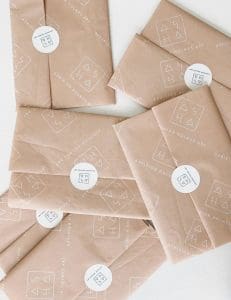
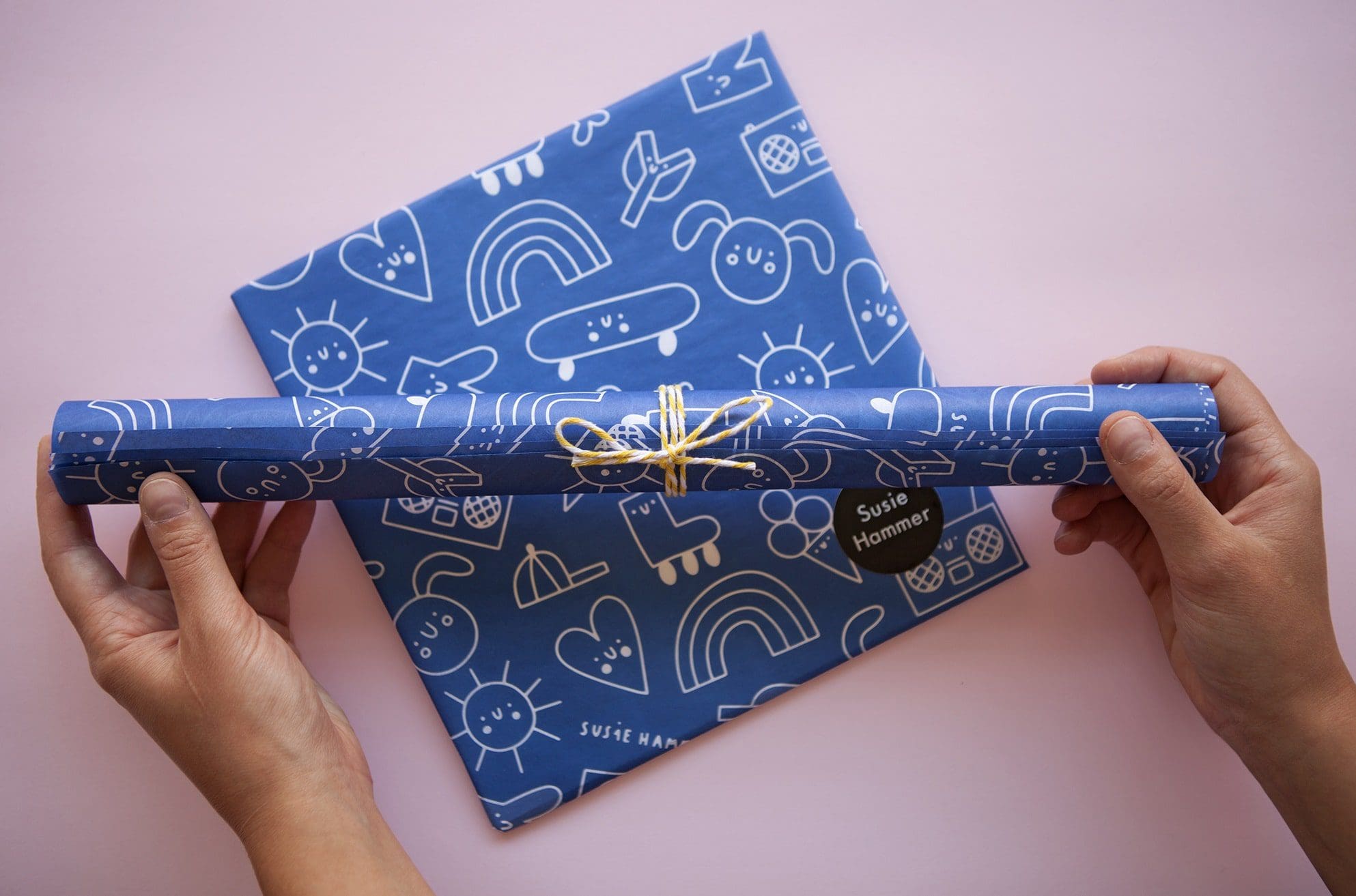
Custom tissue paper – Custom printed tissue paper is great for businesses who are looking for versatility in their custom packaging solution. As well as using it to gift wrap products, it can also be used as packing filler or to line the inside of shipping boxes. It’s an easy way to give your brand a more high-end image!

Custom stickers – Custom stickers are a great place to put logos and brand names, as they provide a strong point of focus within packaging design. You could also consider giving them away with orders as a low-cost gift with purchase!

Custom mailer – Some businesses don’t need larger boxes for their mailings. If you generally fulfill small orders or sell small lightweight goods, consider shipping in custom mailers. Mailers have a low cost per unit and because they reduce bulk, they also result in lower shipping costs!

Custom packing tape – If you want to maximize your investment, custom packing tape is a great option. If you are sealing up your packages for safe shipping, it only makes sense to brand this as well! (noissue’s custom packing tape is making its debut very soon, so keep an eye out!)

You can also get custom boxing from our partners at Arka!

The importance of sustainability

When it comes to fulfilling your packaging needs, there are now other considerations besides cost and functionality. The sustainability of your custom packaging has become a matter of importance to consumers. People are more aware than ever before about plastic pollution and packaging waste, and are taking steps to avoid contributing to these issues. This means making an effort to support brands who use sustainable packaging materials. According to a study by McKinsey, consumers rated packaging as the ‘green premium’ they were most willing to pay extra for.

So, sustainable packaging isn’t just about protecting the planet. It’s also a major asset for your brand!

At noissue,  we don’t think that businesses should have to choose between branding opportunities and being eco-friendly. All of our packaging is printed with 100% renewable soy-based inks, which can be easily de-inked and recycled. We also ensure that our raw materials are sustainably sourced through the Forest Stewardship Council.

With some of the lowest MOQs on the market and fast turnarounds, noissue is the ideal custom packaging solution for businesses. Businesses can also be reassured that they are making the greenest decision for their packaging needs!


Inspection Specification Sheets Prevent Embarrassing Shipments

We’ve previously highlighted the importance of a product specification sheet (PSS).  A PSS aligns your expectations on the quality of your product with the quality of product produced by your manufacturing partner.  Where a PSS establishes expectations on product specifications, a product inspection specification sheet (ISS) outlines how those product specifications will be tested.

An inspection specification sheet aligns your expectations on product usability and functionality.

How to use inspection specification sheets

Kickfurther recently helped manufacture a hot/cold water bottle.  The PSS detailed the shape, logo, packaging, weight and materials. The product inspection specification sheet detailed the bottle’s functionality. The following were quality assurance tested for this water bottle.

  1. When assembled, the water bottle is filled with boiling water and cannot leak
  2. When assembled, the water bottle is filled with ice cold water and cannot leak
  3. When assembled, the water bottle is filled with ice cold water, emptied, and then filled with boiling water

Sounds straightforward, right? But you’d be surprised how many common uses of a product aren’t tested to ensure functionality if they aren’t specified. These listed tests form only a sample of the tests performed on the bottles to ensure the quality of their manufacturing.

Review your quality assurance testing with an ISS

We can’t offer direct recommendations on the tests you should conduct on your product without understanding what your product is, but an ISS is often formulated from the perspective of how the product is expected to be used.  Tests should typically include the following.

  1. Test description – What will be done to the product? Filled, pushed, pulled, etc
  2. Test amplitude – How much of (1) will be done?  For example, how much force will be applied, from what height will it be dropped?
  3. Test pass result – What result means the product passed the test? What margin of error is acceptable?
  4. Test fail result – What result means the product failed?

The benefit of these detailed tests is that not only will you know if there is an issue with your manufacturing process, the test results will often offer specific guidance on what product improvements should be prioritized.

Identify improvements & new product opportunities

Don’t wait to receive customer returns and or until after you’ve processed refunds to identify problems with product quality.  For example, a detailed test report might reveal 25% of your production is failing on a leak test, and 10% is failing on a drop test.  You would want to correct both, but you might be able to salvage a production run by just swapping out the rubber seal for your bottle.  Looking into the future, the inspection offered guidance on future product development or provided ideas on how to update your product specification sheet for the quality of product you need.

Without a PSS and ISS, you’re at the mercy of your manufacturer’s mood. But, with a PSS and ISS in hand, you’re the master of your supply chain.

Product Specification Sheets Prevent Disappointing Deliveries

Avoid being surprised by poorly manufactured goods. Start with a product specification sheet.

Supply chain management can be a tricky thing to master and it can be hard to slow down and reconfigure it when you’re trying to ramp up. That being said, we’ve seen way too many brands get burned by manufacturers because they didn’t bother outline exactly (and we mean exactly) what they were purchasing with a product specification sheet when they submitted an order.

Take this horror story we heard and won’t soon forget: An entrepreneur found a great factory in China to manufacture his product at an incredible price point — 50% better than any other factory.  He jumped on the deal and initiated production right away. When production finished, he requested pictures and the products looked great. Unfortunately for him, when the products arrived (ceramic plates), he discovered the manufacturer had produced the plates in centimeters instead of inches.  He then had an entire container load of unusable products. It was a great price though…

In another example, a business ordered products and was extremely happy with the high quality of the pre-production samples. They later learned (much to their dismay) that the factory had used leftover materials for the pre-production sample and bought much cheaper materials for the main production run.

This is why we say to specify exactly what you need.

Do you really need a spec sheet?

In cases where a business does not get a product specification sheet signed by the factory prior to placing an order, they leave themselves open to the possibility of significant production mishaps.  In the most generous interpretation, these are honest miscommunications. A more sinister interpretation is that profit-driven manufacturers will improve their margins wherever they can.

Spending the time to create a product specification sheet has many benefits:

  • You can easily source quotes from other manufacturers when your product specs are clearly laid out.
  • You can understand where the costs are coming from in your product and either improve specific components or identify places to reduce cost and improve margins.
  • Most importantly, you ensure you’ll receive the product you are expecting to receive.

A little time, a big improvement

You know your product better than anyone else, so spend the time making sure everyone else gets it right: Enter the product specification sheet. Depending on the product, the specs you’ll need to identify will vary, but we recommend considering the following:

  1. Packaging – Materials, weight, printing, text; case size, case count, individual piece dimensions.
  2. Materials – Quality of steel, quality of leather, type of cloth, grade of plastic, etc.
  3. Assembly method – CNC, hand stitch, laser cut out, whatever it may be if it is important.
  4. Components – Zippers, type of chip, type of lens, type of button, brand of component manufacturer.

The above is not an exhaustive list for your product spec sheet, but provides a great launch point and highlights the areas you might overlook clarifying with vendors.

A final word on product specification sheets.  In 95% of cases, it will make no difference whether you have a product spec sheet or not.  However, when it does make a difference, it can make a huge difference. Often it happens at the most inconvenient time: Right when you’re placing a big order, your manufacturer realizes it can save $0.05 by switching to a cheaper and nearly identical component without understanding how badly that can affect your product and brand.  The time you spend building a spec sheet sets your business up for long-term success.

Share with us any other tips or best practices you’ve found with spec sheets.

Increase Margins With This 3-Step Process to Ballpark Production Costs

When you’re building a product business, one of the best ways to increase margins is to lower production costs you’re paying to manufacture your products.  See the below example:

Cost: $1.00
Wholesale Cost: $2.00 50% Margin
Retail Price: $4.00 75% Margin

This pricing structure is often referred to as a double-double scenario, meaning retailers buy from you for double your cost and then sell to the customer at double their cost. Using that model, let’s see what happens if we increase our prices by 10% compared to reduce costs by 10%.

Inc .Cost: $1.10
Inc. Wholesale Price: $2.20 54.5% Margin
Inc. Retail Price: $4.40 77.3% Margin

Now, let’s see what happens if we reduce cost but keep our wholesale price:

Reduced Cost: $.90
Wholesale Price: $2.00 55% Margin
Retail Price: $4.00 77.5% Margin

If you’ve got a lot of brand equity, you can reduce costs while increasing prices to really juice your margins (looking at you, Apple).

Lower Your Costs, Increase Margins

Now granted, the margin differences between reducing costs and raising prices aren’t MASSIVELY different, but you also don’t lose any market share due to increasing costs.  There are many brands we see that pay 30-50% more than they should be for their products. So how can you secure lower prices?

A good starting point is knowing how much your products should cost.  One way we evaluate product costs is to grab a few data points to establish a price range of the final product. Here’s how it works.

  1. Open three tabs in your browser and navigate to Alibaba.com AliExpress.com, and amazon.com.
  2. Search for your product on each of those websites.  If your product is a custom product, look for something similar (i.e. if you have some kind of camera product you could look up dash cams or security systems instead).
  3. Take prices from products that look similar to yours and plug three prices from each source into the yellow fields on this sheet.[Adjust the expected price up or down depending on the customization of your product. If it’s better materials, custom design, etc., adjust up.  If it is simpler or has fewer parts, adjust down.]

By averaging costs from supply sites and marketplace sites, you can identify a rough approximation of what your product actually costs to produce. This is a rough approximation of what your products probably actually cost to make.  By finding similar products on websites that are currently for sale you know you’re going to be in the right ballpark and the prices are very real.

What if you have higher costs?

Keep in mind there are some situations where you will be paying a significantly higher price.  When your products are custom, have expensive materials or have low order quantities, you may end up with a higher cost, but the above method can inform you on what long-term costs are achievable once you scale your brand.  When negotiating with a factory don’t be shy about sharing the links you found and explicitly asking them, “how is this product achieving such a low price point?” The absolute worst case scenario is you learn something new about your competitors; the best case scenario is they relent on pricing or introduce you to a manufacturing level where those costs are achievable.

The lesson here is you can shop around to lower your costs and increase your profit. Let us know if you’ve been successful negotiating your rates!

Good luck!

Crowdfunding or Business Loans: Which Is Right for You?

Fundera Blog
This is a guest post from Fundera, the go-to financial resource for every small business—helping you face your challenges, achieve your financial goals, and grow businesses as big as your aspirations

One of the most common and pressing issues for small business owners is funding. Whether you’re a new entrepreneur or the owner of a well-established venture looking to expand, you’re just as likely to worry about having enough capital on hand.

There are many routes a business owner can take to avoid the fate of other businesses that folded due to cash flow issues, which is often cited as the number one reason why small businesses fail. Two of the most popular options are taking out a business loan and turning to crowdfunding.

These two concepts are fundamentally similar. They both involve raising capital from an outside party, and both may require you to pay back contributors in excess of amount received.

Each form of raising capital comes with its own set of pros, cons, and responsibilities. Whether one is a better choice for your business than the other will depend on your particular financial situation.

Let’s review both business loans and crowdfunding to see which one makes more sense for you right now:

What are business loans?

A business loan, also known as a term loan, is when a lender extends a chunk of money to a business owner, which will be repaid in regular installments plus interest.

Small businesses typically find it more difficult to obtain affordable business loans than large corporations do, especially from banks. In fact, the SBA loan program exists specifically to guarantee bank loans for small businesses, in order to help them find financing at affordable rates.

Online lenders have proliferated in recent years, and many of them can extend financing to small businesses in as little as one day, albeit at higher interest rates than what they would receive from a bank.

What is crowdfunding? 

Crowdfunding is when you finance a business or new project by raising money through contributions from a collective of people. Many popular crowdfunding platforms rely on small contributions from a large population to help launch a new business or product. Other crowdfunding platforms help finance larger financial needs for established or growing businesses. There are a few different kinds of crowdfunding but the most common is reward-based crowdfunding, when a business owner or entrepreneur might deliver small rewards in exchange for a contribution.

Just like online lending, crowdfunding has exploded in recent years; there are now hundreds of crowdfunding platforms that cater to different types of projects, different styles of fundraising (equity-, donation-, or rewards-based options) and different stipulations and rules. For example, some platforms will only let you take money from contributors if you reach your stated financial goal, while others will let partially funded projects receive funds as well.

Typically, to persuade users and strangers to contribute to your crowd fundraiser, you’ll need to create a compelling pitch, which could include photos, videos, testimonials, research decks, and other evidence that your concept or product will be a useful, legitimate success.

When is a business loan right for me? 

Business owners need to be very careful when considering a business loan. There is always a risk when you agree to take on debt, even if you’ve run the numbers and decided that the payoff is worth the potential issues.

That being said, a business loan is a good bet if you and your business can say the following:

  • Your business financials are strong: The most important factors that lenders consider when you apply for a loan are your credit scores, your time in business, and your annual revenue. If all of these are strong, you are more likely to receive offers for loans at affordable interest rates.
  • You need a large chunk of money: Banks and other lenders don’t typically lend to businesses looking for less than $50,000. In fact, the average size of all business loans is $663,000, according to recent data. You’re not likely to hit that number with a crowdfunding effort.
  • Your funding needs aren’t immediate, or, conversely, you need funds right away: This is a seeming contradiction, but it’s true: Loans from banks or through the SBA loan program will likely require an application process that takes months. Online lenders can sometimes supply you with funds the same business day at high interest rates. The middle ground—30-60 days—is where crowdfunding is a better fit.

Think of a business loan as a springboard to greater success, rather than a lifeboat. If your business is struggling, a loan may only help keep you afloat for a limited time; if you’re profitable and healthy, access to capital will help open even more doors for your business.

When is crowdfunding right for me? 

Although a relatively recent entry to business funding, crowdfunding is expected to grow to a $300 billion industry by 2025. For certain businesses and situations, it may be a perfect fit. For example:

  • You have a relatively new business: Startups have more limited options when it comes to affordable bank loans. Crowdfunding may be an easier and less expensive way to obtain funding without going through a bank, and can often provide faster access to money.
  • You have smaller capital needs: If you’re looking for less than $50,000 – $100,000, which many banks enforce as the minimum borrowing amount, crowdfunding can provide funding that better fits your needs. The average amount of a successful crowdfunding campaign is about $7,000. Although some campaigns for big-dollar amounts do succeed, they are the exception, not the rule. There are also newer platforms and options that cater to higher-dollar campaigns, in case your needs grow or you’re seeking a large infusion of capital right away.
  • You can offer valuable (but not costly) rewards: Be sure you can put together a list of potential rewards that won’t, in turn, take away from your crowdfunding earnings. The more non-monetary awards you offer, such as social media shoutouts and item preorders, the better.
  • You’re open to different forms of investment: Business loans are debt-funding, pure and simple. Crowdfunding can be equity-based (you sell a small piece of your business in exchange for capital), debt-based (you repay investors, plus interest), or donation- or rewards-based.
  • You are prepared to try again: Less than a third of all crowdfunding efforts successfully meet their goal. You may need to rework your pitch multiple times until you find pay dirt—and there’s no guarantee you will.

Both traditional financing and crowdfunding are appealing options to successful and promising businesses. You may find that a combination of both options is your best path forward or that neither makes sense for you at this time and you’ll continue to grow organically.

Either way, it’s important to recognize that both routes will take time and energy as you prepare your application and/or your pitch. The payoff, however—in the form of low-cost capital that can help catapult you to the next level, or get your excellent new idea off the ground—is worth it.