The margin model most CPG brands are running was built for a world that no longer exists. We did the math. Here’s what we found.
According to our recent report, in the span of twelve months, the effective U.S. tariff rate went from 2.5% to 27% and back to 12.2%. That’s not noise. For a CPG brand placing production orders months before revenue arrives, that kind of volatility becomes a real cash-flow challenge.
The brands that got hurt weren’t uninformed. They were pricing for a rate instead of a range. It’s a subtle distinction, and right now, it’s the difference between a brand that’s growing and one that’s quietly bleeding margin.
We wanted to understand exactly how widespread the damage was. So we surveyed 200+ CPG brands, pulled the latest tariff data, and built a cost-stack model covering every major expense layer a modern CPG brand faces: tariffs, fulfillment, platform fees, marketing, returns, and financing.
The result might surprise you:
A 50% gross margin in 2026 is the equivalent of a 30% gross margin in 2015.
The keystone markup—buy for $10, sell for $20—worked when tariffs averaged 2.5%, customers primarily bought in stores, and fulfillment meant handing a bag across a counter.
That world is gone.
Today, after accounting for Amazon fees, digital CAC, 3PL costs, and tariff exposure, brands running at keystone margins are losing money on every unit sold, sometimes without even realizing it.
So what does a healthy margin actually look like in 2026?
That’s exactly the question our new research report explores.
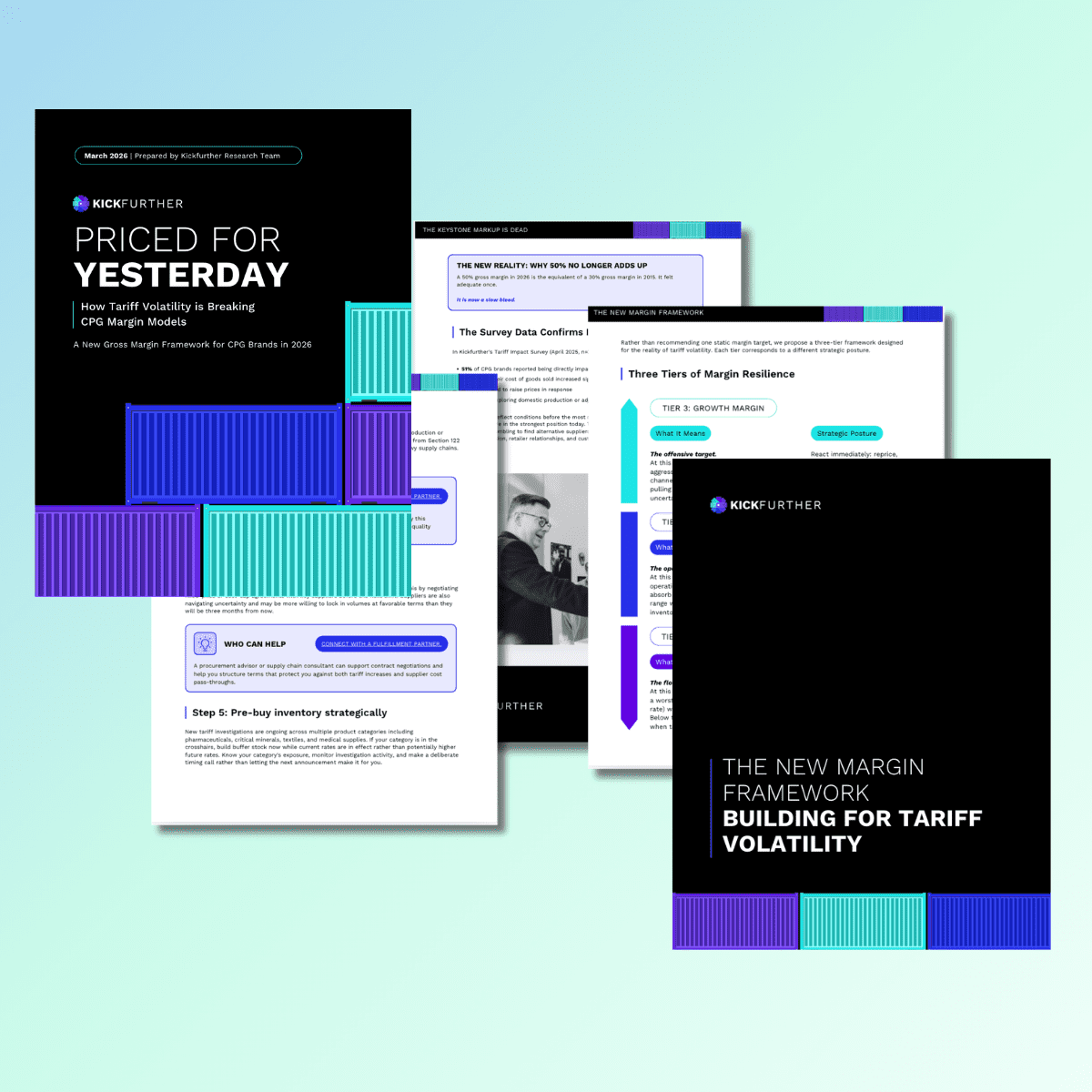
Priced for Yesterday: How Tariff Volatility Is Breaking CPG Margin Models introduces a three-tier gross margin framework with category-specific targets, built from the ground up using a full cost-stack model with a 15–20% tariff buffer baked in.
No matter your industry, the report tells you:
- What margin keeps your business alive when tariffs spike
- What margin supports steady, sustainable growth
- What margin lets you play offense while competitors retreat
It also walks through seven steps CPG brands can take right now—from building margin buffers into your pricing, to pursuing tariff refunds that may still be available from 2025 imports, to pre-buying strategically before the next rate shift.
This is not a “wait and see” moment
Tariff rates will continue to move. The brands that build margins for a range of scenarios and not just today’s rate are the ones that will be standing when the next shift hits.
The report is free. It takes about 20 minutes to read. And it has a framework you can apply to your own numbers today.
[Download Priced for Yesterday →]
Based on the Kickfurther Tariff Impact Survey (April 2025, n=200+ CPG brands), the Yale Budget Lab (February 2026), and CPG margin benchmarks across six product categories. All tariff figures reflect conditions as of early 2026.