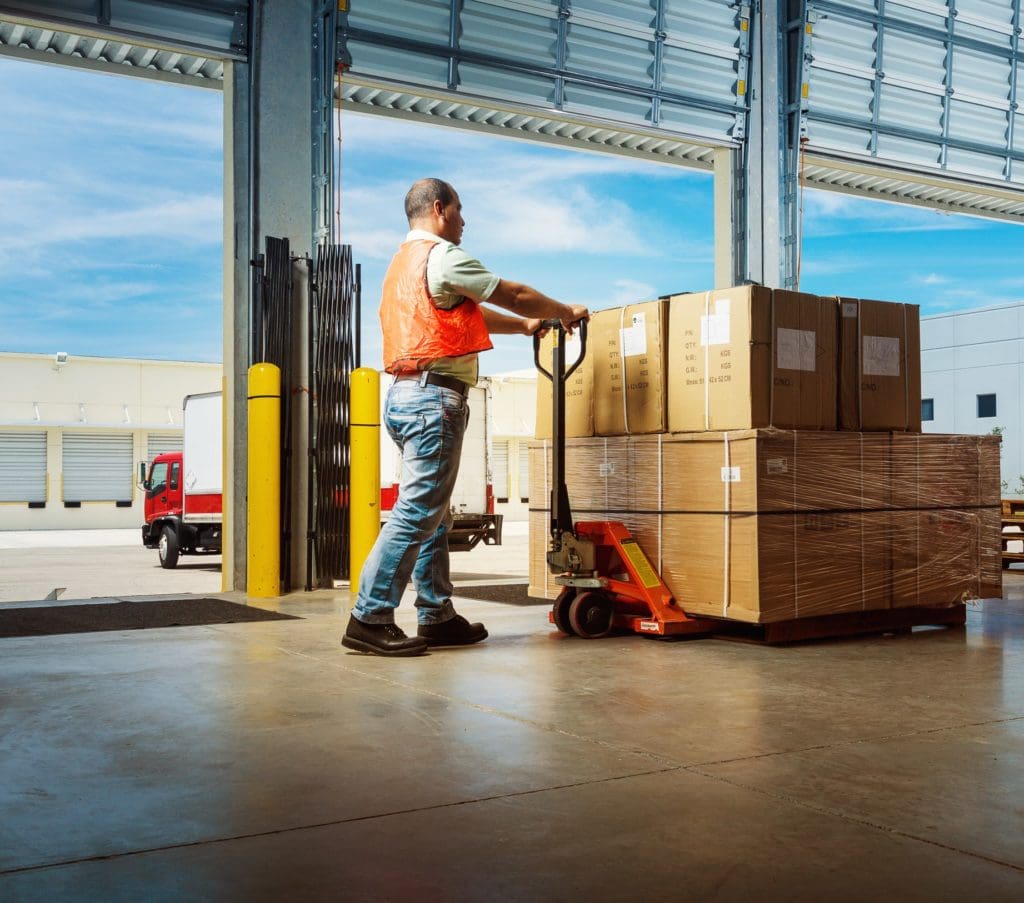
A large purchase order arrives. Demand is surging. You need inventory now. But your cash is still tied up in the last production run, sitting on a warehouse shelf or waiting on a retailer’s net-60 payment terms.
If you run a wholesale, ecommerce, or consumer packaged goods (CPG) Brand, you know that timing gap between paying suppliers and collecting revenue. It’s the core problem inventory financing for large wholesale orders is built to solve.
At Kickfurther, I speak with CPG founders day in and day out, and this is the conversation I have most often with wholesale Brands.
In this guide, I’ll walk you through how inventory financing works for large purchase orders, why the cash gap exists, how the main funding models compare, and how to decide what fits your business.
Key takeaways
- Inventory financing bridges the cash gap between paying suppliers and collecting revenue from retailers or customers.
- Large orders amplify cash strain because supplier payments are due months before retailer payments arrive.
- Consignment-based models, like Kickfurther’s Co-Op model, fund your inventory, and you pay only as products sell.
- To judge the true cost, compare the cost of funding against your margin on the order and the cost of turning it down.
- Payment timing that matches your sales cycle puts far less pressure on cash flow than fixed monthly payments.
What is inventory financing and how does it work?
Inventory financing gives product Brands the cash to buy or produce inventory before that stock generates revenue. The funding provider pays your supplier or manufacturer on your behalf. You pay the provider back once the goods sell and cash comes back into your business.
It’s tied to a specific transaction. Unlike a general-purpose line of credit, inventory financing maps to a purchase order, a production run, or a restock. Your existing cash stays free for marketing, operations, and payroll.
For wholesalers handling large orders, that matters. A single big purchase order can be larger than your cash reserves. Inventory financing fills the gap so you can accept the order, fulfill it on time, and keep working capital for the rest of the business.
Why do large wholesale orders create cash flow strain?
Large wholesale orders strain cash flow because you pay suppliers months before your retailers pay you, and the bigger the order, the bigger that gap.
Manufacturers often want to be paid before your goods even ship. One of the most common structures in China manufacturing is 30 percent down when you place the order and the remaining 70 percent before shipment, according to Harris Sliwoski’s China Law Blog. Meanwhile, retailers, distributors, and marketplaces often pay on net-30, net-60, or net-90 terms. Some, like Walmart, start that clock when the goods arrive, not when they ship (SPS Commerce). The gap between paying out and getting paid can stretch 60 to 120 days or longer.
On routine orders, that gap is manageable. On a large order, it isn’t. A distributor that normally moves $50,000 a month in inventory has no easy way to absorb a single $400,000 order. Every dollar committed to that order is a dollar you can’t use for the next production run, marketing, or daily operations.
Late payments make it worse. 42 percent of business owners say outside pressures delayed payments they owed to their own contractors, suppliers, or vendors. The gap doesn’t stay theoretical, and it grows as you scale.
How does the cash conversion cycle affect wholesale businesses?
The cash conversion cycle (CCC) measures how long your cash stays tied up between paying for inventory and collecting from customers. The formula is CCC = DSO + DIO − DPO.
- DSO (days sales outstanding): how long customers take to pay you.
- DIO (days inventory outstanding): how long stock sits before it sells.
- DPO (days payable outstanding): how long you take to pay your suppliers.

For wholesale businesses, the CCC often runs 90 to 180 days. Say you do $2 million in annual revenue with 40 percent cost of goods. A 120-day CCC means roughly $260,000 is locked in your supply chain at any given time. That cash has to come from somewhere.
Inventory financing works on the DPO side of the equation. When a funder pays your supplier, cash leaves your business later. That shortens your cycle and frees up money that would otherwise sit idle.
What types of inventory financing are available for wholesalers?
Wholesalers have four main ways to fund large inventory orders: consignment-based funding, purchase order financing, inventory lines of credit, and revenue-based financing. Each one handles cost, flexibility, payment timing, and risk differently.
Consignment-based inventory funding
In a consignment model, a funding provider buys your inventory and consigns it back to your Brand. You pay as the inventory sells, on payout dates you set around your actual sales cycle. Because the inventory is consigned, it’s typically not recorded as a liability on your balance sheet. This model works well for wholesale and CPG Brands that need to fund large orders without adding to their existing obligations.
Kickfurther offers this through its consignment Co-Op model. Buyers on the platform purchase your inventory through a Co-Op, Kickfurther pays your manufacturer directly and can also reimburse you for inventory already purchased, and you make no payments until the goods are received and start selling. You can set payout dates anywhere from one to 10 months out, and your Kickfurther fee can go down as you complete more Co-Ops.
Purchase order financing
PO financing gives you cash against a confirmed purchase order from a creditworthy retailer or distributor. A third-party funder pays your supplier to produce and deliver the goods. When your customer pays the invoice, the funder takes its fees and sends you the rest. It only works when you have a confirmed order; it often covers only part of production costs, and fees can run higher.
Inventory lines of credit
An inventory line of credit is a revolving credit line secured by your inventory. You draw funds as needed, pay it down as stock sells, and pay interest only on what you use. It works for businesses with predictable restocking cycles, but it can be hard to qualify for without collateral and a long operating history.
Revenue-based financing
Revenue-based financing gives you cash in exchange for a percentage of future sales. Payments rise and fall with your daily or weekly revenue, which helps in slower periods. But the automatic deduction from sales can squeeze you when cash is tight.
Four questions to ask before you fund a large wholesale order
The right funding structure depends on your business, the order, and your cash cycle. These four questions will help you decide.
How big is your cash gap?
Your cash gap is the order value minus the working capital you have available. Map the full timeline from supplier payment to customer payment, including manufacturing lead time, shipping, and payment terms. That tells you both how much you need and for how long.
Does your margin cover the cost of funding?
If your profit on the funded order is bigger than the cost of funding it, the math works. Don’t compare the funding cost to zero, though. Your own cash has an opportunity cost: every dollar tied up in one production run isn’t going into the next order, a marketing campaign, or a bulk discount from your supplier.
For example, if your gross margin on the order is 40 percent and the cost of funding is a small fraction of that, you come out ahead.
Does the payment timing match your sales?
The best structure has you paying as your revenue comes in, not before. Fixed monthly payments that start right away create cash pressure before you’ve sold anything. Look for options that let you line up payments with when your customers actually pay you.
How will the funding show up on your books?
If you plan to raise capital, sell the business, or apply for a working capital line later, how your funding appears on your books matters. Consignment-based funding is typically not recorded as a liability, which keeps your balance sheet cleaner.
What makes consignment-based funding different for wholesalers?
With consignment-based funding, the inventory belongs to the Buyers who funded it until it sells, not to your business. That changes three things in practice.
- You pay only as you sell. No fixed monthly payments start the day funds go out. Your cash going out lines up with your cash coming in.
- It typically stays off your balance sheet. A Co-Op is a consignment agreement, so it’s typically not recorded as a liability. For CPG and ecommerce Brands working toward a raise or an exit, that distinction matters.
- Your cost can come down over time. As you complete Co-Ops, you build a track record with Buyers, which can lower your Kickfurther fee on future Co-Ops.
How Kickfurther helps
Kickfurther funds up to 100 percent of your inventory costs and pays your supplier directly.
How should seasonal wholesalers approach inventory financing?
Seasonal wholesalers should line up inventory funding before peak production starts, not when the order lands. You have to commit cash to production months before your selling season, so the gap runs longer and a mistake costs more.
Picture a homeware Brand that places its main holiday restock order in June. Production and shipping can take 90 to 150 days, and retailers pay 60 days after delivery. That’s about five months between the first payment out and the last payment in.
If you fund that order yourself, the cash is locked up for the whole window. If a second opportunity shows up during peak season, you may not have the reserves to take it. Kickfurther can fund up to 100 percent of a seasonal order, with no payments due until the inventory starts selling.
In my experience, the Brands that do this well set up a funding relationship before they need it. Shopping for funding under pressure in a closing seasonal window means worse terms and onboarding from scratch. Starting early gives you time to compare providers, understand total costs, and move fast when an opportunity comes.
If you’re not sure when to place your order, our Beat the Freeze calculator works backward from Chinese New Year factory shutdowns to show you when to order.
How does inventory financing compare to other funding options?
Inventory financing is one of several tools in a growing Brand’s funding mix, and each one solves a different part of the cash cycle.
Invoice factoring
Invoice factoring gives you cash against unpaid customer invoices. It solves the collection side of the cash cycle, not the production side. If you’re waiting 60 days for a retailer to pay an invoice, factoring is the right tool. If you need to pay a manufacturer before you can produce the goods, inventory financing is the better fit.
Business lines of credit
A business line of credit gives you flexible, revolving access to cash. For established businesses with strong credit, it can cost less. But qualifying usually takes years of operating history, collateral, and personal guarantees, which early-stage and fast-growing CPG Brands often don’t have yet.
Equity financing
Raising a round solves a working capital problem at a high long-term cost. If your business is valued at $4 million and you trade 10 percent ownership for $400,000 in working capital, you’ve given up permanent value to solve a recurring timing problem. Inventory financing solves the same problem without diluting your ownership.
Used together, these tools shorten your cash conversion cycle from both ends. Inventory financing covers the production cycle, and factoring shortens the collection cycle. Product businesses at scale often use both.
What should you look for in an inventory financing provider?
Look for a provider that funds a high share of your inventory cost, matches payments to your sales, funds quickly, and grows with you. Here’s what to check.
Advance rate and coverage
Some providers cap funding at 50 to 80 percent of inventory cost. Kickfurther can fund up to 100 percent of your cost of goods, so your operating cash stays free for other priorities.
Payment timing
Ask how payments work. Fixed monthly payments? Daily deductions from sales? Payout dates tied to your selling periods? The closer the structure matches your actual revenue timing, the less pressure it puts on your cash flow.
Speed of funding
When a large order needs action now, a slow approval process puts it at risk. At Kickfurther, approval typically takes three to five days while our team reviews your financials, sales velocity, and inventory turnover. Once you’re approved, funds can be wired the same day.
Balance sheet treatment
Ask whether the funding will show up as a liability. Consignment-based funding is typically not recorded as one. Confirm the treatment with your accountant.
Room to grow
Your funding needs will grow with your business, so look for limits that rise as you build a track record. Kickfurther funds everything from a first restock up to $2M+, and your limits can grow as you complete Co-Ops.
Common mistakes when financing large inventory orders
Three mistakes come up again and again with Brands funding a large wholesale order for the first time.
- Comparing the cost of funding to zero. The real comparison is the cost of not filling the order. Your own cash isn’t free.
- Accepting payment terms that don’t match your sales. If you’re paying a funder before the goods sell, you’ve created a second cash gap on top of the first one.
- Treating funding as a last resort. Brands that set up a funding relationship before the urgent moment can compare options calmly and move fast when the next large order comes in.
How to choose the right inventory financing for your wholesale business
The gap between paying suppliers and collecting from customers is built into every wholesale, ecommerce, and CPG business. It doesn’t shrink as you grow. It gets bigger with every large purchase order.
The right inventory financing partner does more than fill that gap. It matches payments to your actual sales cycle, keeps your balance sheet clean, and grows with your business. That’s what Kickfurther was built for: funding up to 100 percent of your inventory costs, with no payments until you sell, so your cash stays free for growing your Brand.
If you’ve turned down an order, delayed a restock, or held back a launch because the cash wasn’t there, that’s the signal.
See if a Co-Op fits your next order
FAQs about inventory financing for wholesale orders
What is inventory financing for wholesalers?
Inventory financing for wholesalers gives you cash to buy or produce stock before that inventory generates revenue. A funding provider pays your supplier, and you pay the provider once the goods sell and cash comes back into your business.
How does Kickfurther’s consignment model work for large orders?
Kickfurther connects your Brand with Buyers who fund your inventory through a consignment Co-Op. Kickfurther pays your manufacturer directly, and you pay only as the inventory sells, on payout dates you set from one to 10 months out. Funding ranges from a first restock up to $2M+.
Can seasonal wholesalers qualify for inventory financing?
Yes, as long as they meet the provider’s qualification criteria. Seasonal businesses are a strong fit because the funding bridges the gap between pre-season production costs and peak-season revenue. Kickfurther can fund up to 100 percent of inventory costs, with no payments until the inventory starts selling.
What is the difference between inventory financing and purchase order financing?
Inventory financing covers the cost of producing or buying stock, whether or not a specific customer order exists. Purchase order financing requires a confirmed order from a creditworthy retailer or distributor. Inventory financing is more flexible because it doesn’t depend on a single confirmed PO.
How quickly can a wholesaler get funded for inventory?
It depends on the provider. With Kickfurther, approval typically takes three to five days, while the team reviews your financials, sales velocity, and inventory turnover (depending on how quickly they receive the information required). Once you’re approved, funds can be wired the same day.
Does inventory financing add to my company’s balance sheet?
It depends on the structure. Consignment-based funding through Kickfurther is typically not recorded as a liability, because a Co-Op is a consignment agreement. Confirm the treatment for your business with your accountant.